
01. Process & Research
Behind SKIO Music
creator platform
Ethnographic field research, 12+ user roles mapped, the automated legal system that replaced manual contracts, and the design system that tied it all together.
02. Research & Discovery
Hundreds of hours in the studio
I didn’t research the music industry from behind a desk. I spent hundreds of hours embedded in Friday-night studio sessions — observing real workflows, building trust with artists, and documenting what the industry actually needed rather than what it said it needed.
"Artists didn't just need better tools — they needed freedom from systemic exploitation. That distinction changed everything about what we built."
01. Ethnographic embedding
Studio sessions
02. User role mapping
12+ roles documented
03. Pain point documentation
4 systemic issues
04. MVP prototyping
Prove demand first
05. Iterative service design
Test & scale

User roles mapped — 12+ distinct audiences
Every role had distinct goals but shared common frustrations around legal access, trust, and discovery. Mapping them separately prevented us from building for an imaginary average user.
Independent producer
• Monetize beats, find vocalists • No legal protection on collabs
Recording artist
• Grow fanbase, license music • Weeks to finalise contracts
DJ / Remixer
• Access stems legally, compete • Copyright takedown risk
Label A&R
• Discover emerging talent • Fragmented scouting tools
Rights holder / Label
• Scale catalog reach, earn UGC revenue • Manual licensing at scale impossible
Entertainment attorney
• Protect client IP efficiently • High volume of low-value micro-deals

03. Findings
Four systemic pain points
Research identified four structural problems that no existing product had solved — each one compounding the others. Solving all four was the mandate for the platform.
Legal delays
Contract turnaround measured in weeks. Most artists couldn't afford entertainment attorneys for small collaborations, so legal protection was simply skipped - exposing all parties.
Lack of trust
Without enforceable agreements, collaborators couldn't commit fully. Stolen beats, disputed credits, and unpaid royalties were endemic - and normalized.
Costly processes
Professional-grade legal and financial infrastructure was priced out of reach for independent creators. Only artists with label support could access proper protection.
Fragmented tools
Discovery happened on one platform, licensing on another, payment on a third. No system tied creative, legal, and financial workflows into a single trusted environment.
04. Core design decision
Replacing manual contracts with automated split sheets
The platform’s most consequential design decision was making the legal layer invisible to creators. Rather than prompting artists to “fill in a contract,” SKIO’s split sheet system was woven directly into the collaboration flow – terms set by slider, agreements auto-generated.
Negotiate terms
Artists Hire attorney
Lawyer Drafts contract
Review & revise contract
Both Sign Weeks Later
Set terms via slider
Splits, usage rights, territory
Auto-generate agreement
Legal language, no attorney
Both parties sign
Under 10 minutes · No attorney required
Before - manual contracts
- Weeks of back-and-forth negotiation
- Attorney fees inaccessible to most creators
- Most small collaborations skipped contracts entirely
- Copyright disputes unresolved for months
- No standardized royalty split language
After - SKIO split sheets
- Terms set by slider in minutes — no legal vocabulary needed
- Agreements auto-generated with attorney-reviewed language
- Both parties protected from the first collaboration
- Turnaround under 10 minutes from start to signed
- Scaled to handle thousands of micro-licences instantly
05. Design System
One framework for a complex ecosystem
The platform spanned profiles, wallets, contracts, social feeds, contests, and licensing dashboards – all serving different user roles. A component-based design system was the only way to maintain consistency and enable the team to ship features rapidly.
Tier 03 - Platform surfaces
Talent marketplace · Contests · Licensing dashboard · Social feed
tier 02 - Unified component library
Profiles · Wallets · Contracts · Track cards · Notifications · Legal forms
Tier 01 - Foundations
Design tokens · Dark-mode colour system · Typography · Iconography · Accessibility
06. Design Process
Build fast, validate constantly
The music industry is skeptical of outside technology. Every decision needed validation – with real artists, in real sessions – before we could build credibility or scale. The process was iterative by necessity.
01. Prototypes & investor demos
Created clickable flows used directly with artists to test features and with investors to secure buy-in. Early prototypes focused on the split sheet interaction - proving the legal layer could feel simple and fast.
02. MVP - lightweight contracts first
Released lightweight contract versions to prove demand before investing in the full legal system. Real artists using a basic split sheet gave us the validation to build the automated version.
03. Continuous user testing
Constant sessions with artists, producers, and label reps to simplify complex legal and payment flows. The goal was always that financial and legal steps felt invisible - not like form-filling.
04. Accessibility - clarity for non-legal users
Prioritised UX writing to make financial steps approachable for creators without a legal background. Rewrote all system messages, tooltips, and CTA labels across the onboarding and contract flows.
05. Contest system design
Designed the remix and original contest flows as the platform's primary growth engine. Worked with artists like The Chainsmokers to test the submission and judging experience before major campaign launches.
06. Design system - built for scale
Built the component library to unify profiles, wallets, contracts, and social features - enabling the development team to ship new features consistently without designer involvement for every component.
07. Reflections
What I learned
What worked
- Embedding in the community — studio sessions surfaced pain points that no survey would have found, and built the trust that made early validation possible
- Mapping 12+ distinct user roles prevented us from designing for an average user that didn't exist - each role got distinct flows
- Making the legal layer invisible - artists responded to "set your splits" not "sign a contract"
- Using MVP contracts to prove demand before building the full automated system saved significant development investment
What I'd do differently
- Define success metrics for the legal tools earlier — we had adoption data but limited outcome data on dispute resolution
- Build more structured feedback loops with the entertainment attorney team - their domain expertise was underutilised in the design process
- Create a formal change management plan for platform transitions — feature expansions disrupted existing workflows more than anticipated
SKIO Music
Creator Platform
Aug 2015 – Dec 2019
Grew from product designer to strategic product lead – defining the vision for a vertically integrated platform that replaced manual music contracts with automated legal tools, built a global content marketplace, and grew a creator community of 650,000+ users.
The Final Result

Frictionless experience that would drive user adoption and measurable financial growth.
The Challenge
The music industry ran on fragmented, inaccessible systems. Contracts took weeks and required expensive attorneys. Content owners had no scalable way to licence catalogues. There was no unified environment where creativity, commerce, and community could co-exist — so every creator was exposed and every collaboration was a legal risk.
- Contract turnaround measured in weeks, not minutes
- Copyright takedown risk on every remix or derivative work
- Labels had no scalable tool for community UGC licensing
- No pathway for independent talent to reach industry recognition


My Role
August 2015 – December 2019
Joined as Product Designer in 2015 and grew into Product Lead over 4.5 years. I defined the vision, built the design system, led cross-functional teams spanning musicians, developers, producers, and entertainment attorneys, and drove every major product decision from concept through to global scale.
- Platform vision & product strategy
- Ethnographic field research
- Design system architecture (Figma)
- Automated legal split sheet design
- Content marketplace & licensing UX
- Contest & gamification systems
A vertically integrated platform
SKIO wasn’t designed as a collection of features. It was conceived as an ecosystem — a single environment where every participant in the music value chain could operate. The diagram below, developed as part of the product strategy work, shows how all platform nodes interconnect across creation, ownership, legal, commerce, and community.

How the platform created value
Each pillar served a distinct audience but shared the same legal, financial, and social infrastructure – meaning every new feature compounded the value of every existing one.
Talent Marketplace
The career engine for independent producers and artists. Legal access to song stems from major labels, A&R visibility, and a professional EPK - all in one dashboard. Creators could find collaborators, negotiate custom contract terms via simple sliders, and build a verifiable portfolio without needing label representation.
Content Marketplace
Built for labels, managers, and rights holders who needed to scale their catalogue's reach without manual licensing overhead. Content owners could upload masters and stems, set remix terms, and issue thousands of micro-licences instantly through an automated legal interface. Sound packs and plugins extended the marketplace into production tools, creating an additional revenue stream.
Remix & Original Contests
The platform's primary growth and engagement engine. Contests transformed passive users into active creators - and gave content owners a powerful tool to activate fanbases at scale. Artists like The Chainsmokers and Clean Bandit ran campaigns that generated millions of impressions and thousands of high-quality remixes.


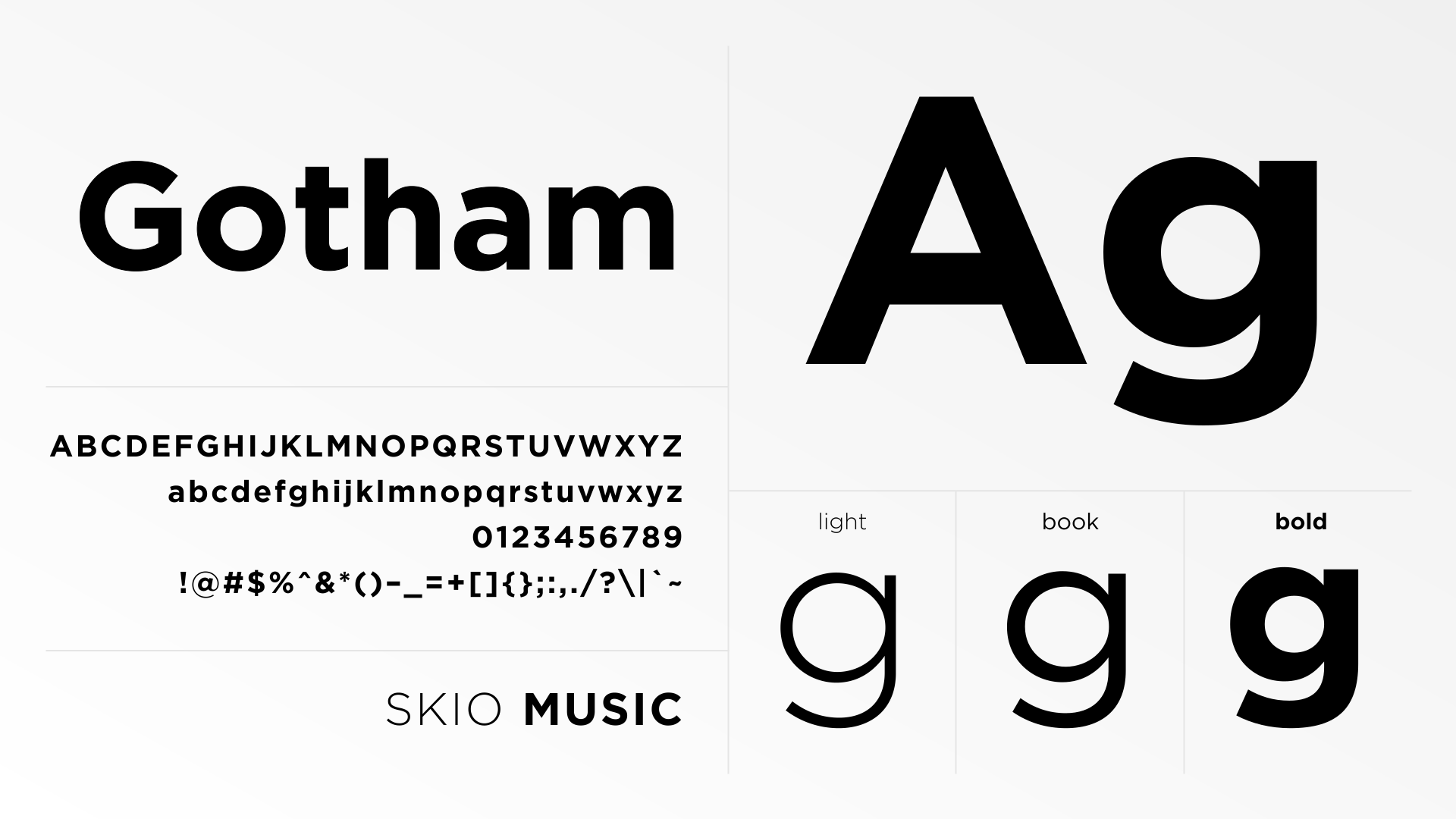
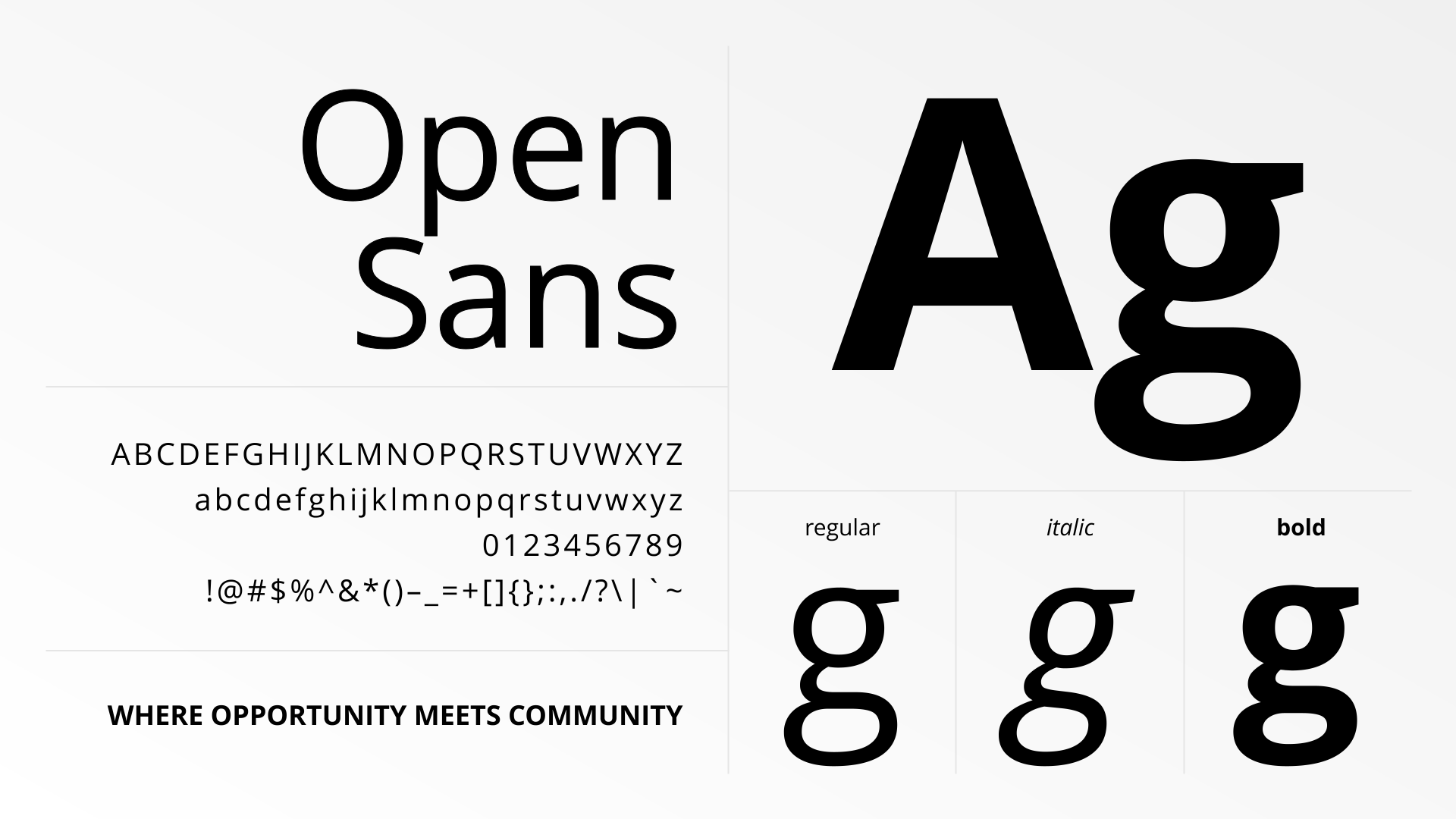
Typography & Color Scheme
The visual language of the platform was designed to work throughout the producer’s journey – dark theme when a user is browsing, light theme to represent the physical contract.




What we built, what it proved
SKIO was still scaling when I transitioned out in 2019. The platform demonstrated that creator-first legal infrastructure was commercially viable and globally scalable — validated by Grammy-winning producers, major label participation, and a community growing across dozens of countries.
- 650,000+ registered users across the global creator community
- $750,000+ in prizes distributed to creators worldwide
- 10M+ global impressions generated through contest campaigns
- Automated split sheets reduced contract turnaround from weeks to under 10 minutes
- Majority of platform collaborations used SKIO’s built-in legal tools within the first year
- Content marketplace enabled labels to issue thousands of micro-licences instantly
- Design system unified 14+ platform entities – profiles, wallets, contracts, social features – into one scalable framework
Want to see how it was built?
The process page covers the ethnographic research, all three pillars designed in depth, the automated legal system, and the design system architecture – across 4.5 years of work.


