
01. Process & Research
Behind Invoice Simple
payments solution
Research methodology, the four drop-off problems, design decisions, and how each metric moved — from address verification through to checkout conversion.
02. The Foundation
Design system - the prerequisite
Before the payments work could begin properly, the platform needed a coherent foundation. Duplicated components, inconsistent accessibility standards, and divergent UI patterns were slowing development and creating user friction. I audited the entire product and built a modular design system in Figma before proceeding.
Tier 03 - Product surfaces
Invoices · Estimates · Payments · Receipts · Client portal
tier 02 - Component library
Profiles · Wallets · Contracts · Forms · Buttons · Tables · Notifications
Tier 01 - Foundations
Design tokens · Colour · Typography · Spacing · Icons · Accessibility standards

03. Research & Discovery
Finding the drop-offs
The existing third-party payment integration was failing in ways that weren’t immediately visible. I started with deep data analysis to locate exactly where users were abandoning the flow – then validated findings through workshops before committing to solutions.
01. Competitive analysis
Payments landscape
02. Drop-off data analysis
4 failure points
03. User research
Sole proprietors
04. Validation workshops
Prioritise fixes
05. Usability testing
Verify & iterate

Four drop-off areas identified
Data analysis revealed four compounding failure points in the onboarding funnel. Each was addressed in sequence – fixing upstream problems first so downstream metrics would follow.
A. Personal info - sole proprietors
80% of users are sole proprietors. The flow asked for unnecessary business data, creating friction for the majority before they could proceed.
B. Business info - over-collection
The remaining 20% of business users faced overly complex requirements. Simplifying for this group reduced abandonment without affecting approval logic.
C. Instant approval - the 10-minute window
Users who didn't receive instant approval fell into a manual review queue. Targeting the auto-approval rate was critical to avoiding this drop-off.
D. Total approval rate - the downstream metric
Solving A, B, and C directly moved this primary metric. Total approval rate was the compound outcome of fixing every upstream issue.
04A. Solution 1 of 3
Address verification - Google Address Validation integration
Data showed users needed to match 8 of 10 data points with registry records for auto-approval. The most common failure was not bad data – it was typos. A Google Address Validation autocomplete integration eliminated the problem at the source, with minimal development effort.
"The simplest decision often moves the biggest number. Removing the ability to make a typo raised auto-approvals from 73% to 79% overnight."


04B. Solution 2 of 3
KYC integration - real-time verification
After addressing verification, the next bottleneck was identity failures. I identified and integrated a third-party KYC solution that let users fix data discrepancies in real time – before submission – rather than failing silently and entering a manual review queue.
To validate the approach before full rollout, I tested the KYC flow with a cohort of 100 users who had previously failed approval. The results justified full integration.
User submits data
System KYC Checks
Discrepancy shown inline
User fixes & resubmits
User Auto approved

04C. Solution 3 of 3
Checkout redesign - payment method clarity
With onboarding fixed, the checkout experience remained a conversion problem. Research revealed users believed PayPal was the only payment option available. By rearranging and custom-styling the payment method buttons, all options became equally visible at a glance.
"A visual hierarchy change - no new features, no new integrations - drove a 9% conversion lift within 48 hours of going live."


05. Design Process
Full lifecycle - concept to launch
Every stage was validated before moving forward. Constant testing and iteration on real-world results, not assumptions.
01. Flows - simplified onboarding
Removed redundant steps for sole proprietors. Separated personal and business paths so 80% of users no longer saw irrelevant fields.
02. Wireframes & prototypes
Built interactive Figma prototypes to test navigation, checkout clarity, and form field sequencing before any development work began.
03. Address verification - field level tracking
Rebuilt address forms with Google Maps autocomplete. Field-level tracking confirmed that registry match failures dropped from 27% to 21%.
04. KYC integration - real-time correction
Integrated third-party KYC with inline discrepancy surfacing. Tested on 100 previously-failed users before full rollout. Pushed total approvals to 93%.
05. Checkout redesign - visual hierarchy
Rearranged and custom-styled payment method buttons for equal visual weight. 9% conversion lift confirmed within 48 hours of launch.
06. Design system - ongoing consistency
Maintained the component library in parallel with delivery. All new payments UI patterns were added to the system as they shipped.
06. Reflections
What I learned
What worked
- Starting with data before designing - the four drop-off points gave a clear priority order that prevented wasted effort
- Testing KYC on a small cohort of 100 previously-failed users before full rollout - de-risked the integration at low cost
- Building the design system first meant payments UI shipped faster and more consistently than it would have otherwise
- Treating the checkout as a perception problem, not a technical one - the fix was visual hierarchy, not new functionality
What I'd do differently
- Instrument the onboarding funnel with field-level analytics earlier - we had to reconstruct some drop-off data retroactively
- Run more longitudinal retention studies - we measured conversion well but had less visibility on long-term payment behaviour
- Build the design system before, not during, the payments feature work - the parallel track added coordination overhead
Invoice Simple
Payments Solution
Nov 2019 – Nov 2021
Created the vision, strategy, and go-to-market plan for a payments solution from the ground up – converting 80,000 users and driving $30M USD in monthly payment processing volume.
The Final Result

Frictionless experience that would drive user adoption and measurable financial growth.
The Challenge
Invoice Simple’s third-party payment integration was underperforming. Low approval rates, a confusing checkout, and no data visibility on drop-offs were limiting the platform’s ability to scale. The core challenge was moving beyond basic invoicing to own the full payment experience.
- Low auto-approval rate (73%) due to address typos
- KYC failures pushing users to manual review queues
- Checkout confusion – users didn’t see all payment options
- No internal data on where users were dropping off


My Role
November 2019 – November 2021
Principal Product Designer and Product Manager for a two-year contract. I owned the full lifecycle – from defining the payments vision and go-to-market strategy through to design system delivery, onboarding redesign, and checkout conversion.
- Product vision & go-to-market strategy
- Design system (Figma)
- Payments onboarding flows
- KYC & address verification UX
- Checkout redesign
- Usability & conversion testing
Design System & Payments Solution
My initial initiative involved the development of a comprehensive design system and a cohesive visual elements library to rectify these discrepancies.


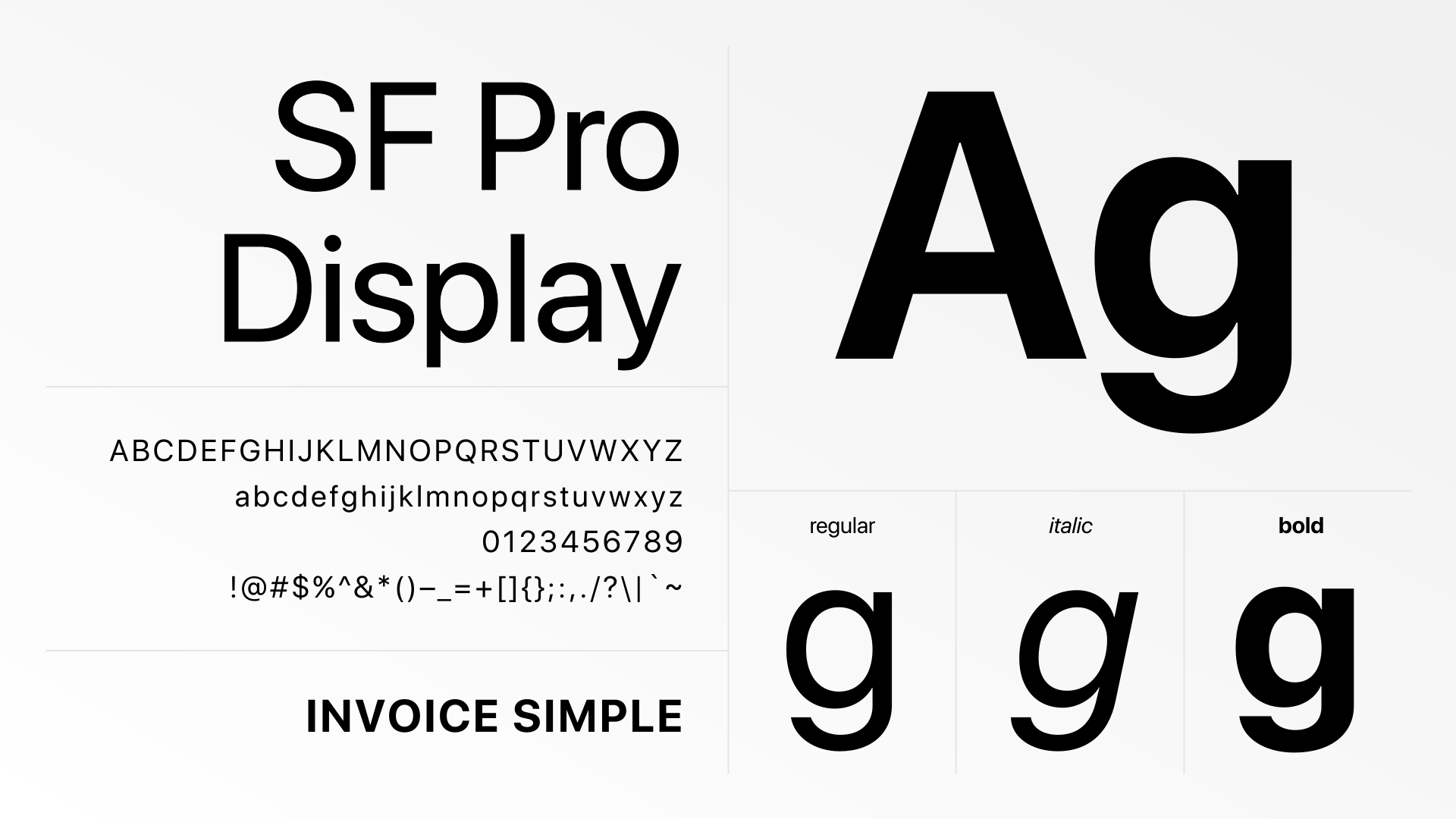
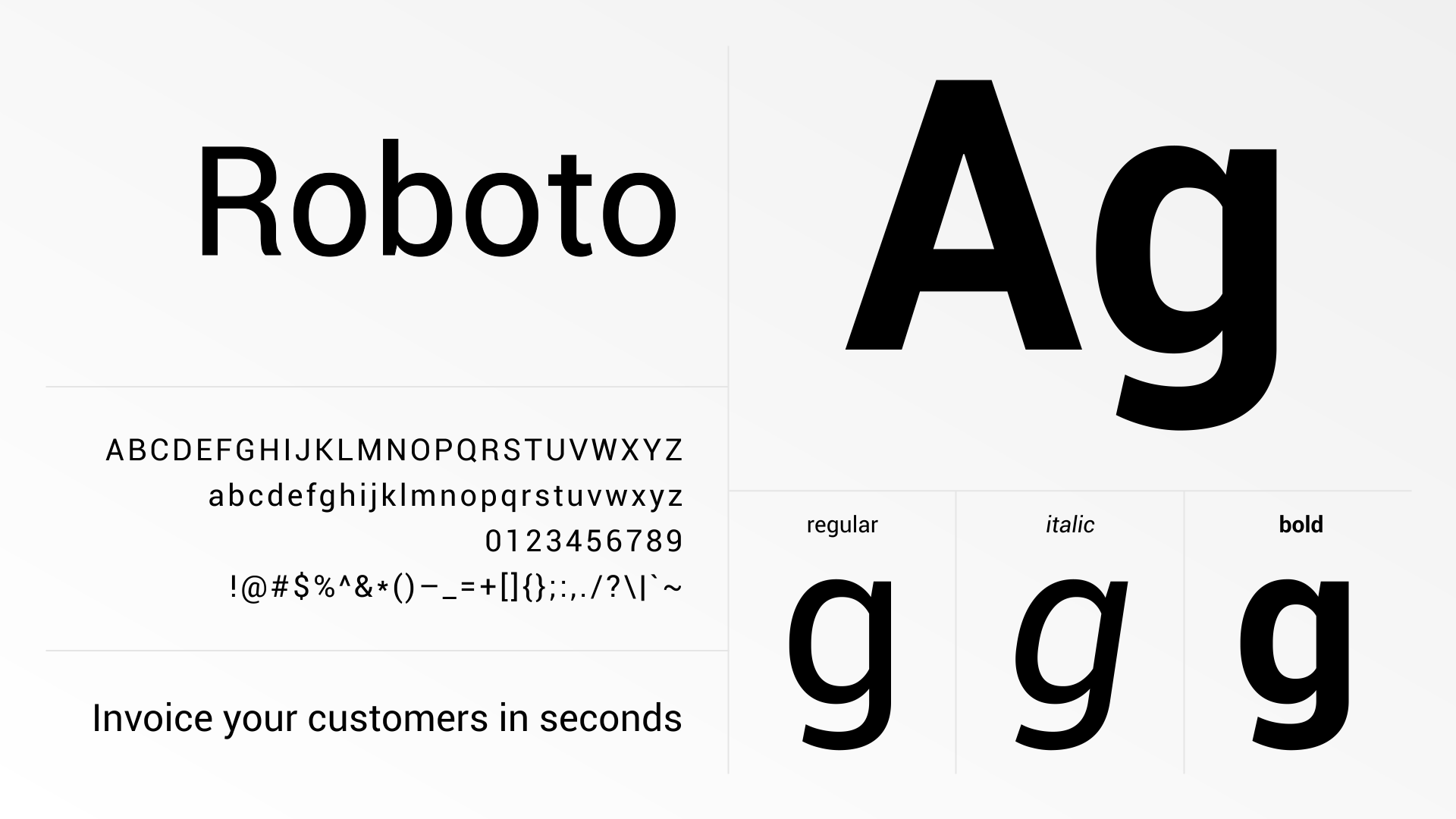
Typography & Color Scheme
The visual language of the portal was redefined to balance federal authority with modern accessibility. I implemented a clean, highly legible typography to ensure zero-latency loading and maximum readability across diverse government hardware.



Measurable Results
Every metric improved. The payments solution ultimately positioned Invoice Simple as a revenue-generating platform, contributing to its acquisition by Evercommerce.
- 80,000 users converted to the new payments platform
- $30M USD in monthly payment processing volume at scale
- $5M in additional annual net revenue generated
- Google Maps address verification raised auto-approvals from 73% to 79%
- Real-time KYC integration pushed total approvals from 79% to 93%
- Checkout button redesign drove 9% conversion lift within 48 hours of launch
- Design system unified inconsistent UI across profiles, wallets, and contracts
- Platform acquisition by Evercommerce followed the successful launch
(73% ➝ 88%)
(79% ➝ 93%)
(in 48 hours)
Want to see how it was built?
The process page covers the full research methodology, six design phases, design system architecture, and what I’d do differently – with diagrams for each stage.


