
01. Process & Design
Behind Gold Pocket
crypto wallet solution
A focused two-month sprint – stakeholder discovery, design system from scratch, and the decisions that made complex financial flows feel calm and familiar.
02. Sprint structure
Two months, two phases
With only eight weeks, the process had to be front-loaded with discovery and alignment – then move fast into design execution. The stakeholder relationships (CEO, engineering, compliance) were the primary research input for this project, supplemented by competitive heuristic analysis and flow auditing.
Weeks 1-3 | Discovery & architecture
- Stakeholder interviews - CEO, CTO, compliance lead
- Jobs to be Done mapping
- Competitive heuristic review
- Flow & risk mapping (happy paths + edge cases)
- Information architecture decisions
- Constraint alignment with compliance team
Weeks 4 - 8 | Design & delivery
- Design system - tokens, components, dark palette
- Visual language & brand expression
- All five core transaction flows
- KYC and compliance UI patterns
- Loading, feedback, and error states
- Developer handoff & specification docs
03. Discovery
Listening before designing
Given the condensed timeline, research was focused and deliberate — stakeholder interviews, competitive analysis, and a structured Jobs to be Done exercise to surface what users actually needed versus what the industry typically builds for them.
"People are not scared of money. They are scared of making irreversible mistakes. That single insight shaped every subsequent design decision."
01. Stakeholder interviews
CEO · CTO · Compliance
02. Jobs to be Done mapping
4 core user needs
03. Competitive heuristic review
Common failure points
04. Flow & risk mapping
Happy paths + edge cases
01. Buy safely
Users need to convert fiat to crypto with total confidence - knowing exactly what they'll receive, what it costs, and that the rate won't change beneath them.
02. Cash out reliably
When users want to sell, they need certainty about settlement timelines and bank deposit confirmation - "when will I see my money" is the top anxiety.
03. Swap predictably
Crypto-to-crypto exchange needs to feel as predictable as a bank transfer - no surprise slippage, no ambiguous "approximately" outputs without context.
04. Keep accurate records
Tax obligations around crypto are complex. Users need a clear transaction history with dates, amounts, and cost basis - something most crypto products do poorly.

Built from scratch for a two-month sprint
With no existing design system to build on, I established the complete visual foundation in the first two weeks — tokens, colour system, typography, component library — before any feature screen design began. This was the decision that made the sprint speed possible.
Tier 03 - Product screens
Buy · Sell · Swap · Send · Receive · Portfolio · Activity · KYC
tier 02 - Component library
Wallets · Transaction cards · Quote timers · Fee tables · KYC steps · Alerts · Input fields
Tier 01 - Foundations
Dark-neutral palette · Gold accent tokens · Typography scale · Spacing · Error & success states

05. Design Process
From alignment to handoff in eight weeks
01. Stakeholder interviews & JTBD mapping
Worked directly with the CEO, CTO, and compliance lead to establish shared understanding of user needs, technical constraints, and regulatory requirements. Mapped four Jobs to be Done that anchored every subsequent design decision.
02. Competitive heuristic review & flow audit
Analysed leading crypto platforms (Coinbase, Binance, Kraken) for common UX failures: hidden fees, ambiguous network steps, unclear error states. Documented patterns to avoid and patterns to adopt.
03. Information architecture & constraint alignment
Established the bank-like IA grouping (Transact / Portfolio / Account) and aligned it with the compliance team to ensure every regulatory requirement had a clear, humane placement in the user journey.
04. Design system - foundations and components
Built the complete token set, dark-neutral colour system, typography scale, and component library from scratch before any feature screen design. This upfront investment made the subsequent five flows fast to produce and consistent from day one.
05. Task flows & prototypes
Designed all five core transaction flows with four-step structures, real-time quote timers, and full fee transparency. Prototyped the Buy and Swap flows for stakeholder review and usability validation.
06. Usability testing & developer handoff
Conducted moderated usability sessions to validate transaction flows and fee transparency patterns. Delivered complete specification documentation to the engineering team - component specs, interaction notes, and edge case coverage.

06. Reflections
What I learned
What worked
- Building the design system before any screen - it felt like overhead in week two, but it made weeks four through eight dramatically faster and more consistent
- The "irreversible mistakes" insight from the JTBD exercise became a filter for every design decision - when in doubt, ask "does this reduce the risk of an irreversible mistake?"
- Close collaboration with the compliance team from day one meant regulatory requirements shaped the UX positively, rather than being retrofitted awkwardly at the end
- Working directly with the CEO and CTO removed the usual stakeholder communication layers - decisions that would typically take days took hours
What I'd do differently
- Run more user testing earlier - the sprint timeline compressed usability validation to the final weeks; moving it to week three would have surfaced edge cases sooner
- Invest more time in the notification and receipt system - it was delivered MVP-minimal and would benefit from the same design attention as the transaction flows
- Document the design principles more formally at the start — "reveal, don't hide" and "slow down at stakes" emerged organically but weren't formalized until later in the project
Gold Pocket
Crypto Wallet MVP
Sept 2025 – Nov 2025
Led end-to-end design for a consumer crypto wallet – from information architecture and design system to a production-ready MVP that makes buying, selling, swapping, and sending digital assets feel as familiar as mobile banking.
The Final Result

Frictionless experience that would drive user adoption and measurable financial growth.
The Challenge
Most crypto products are built for people who already understand crypto. Gold Pocket was targeting mainstream users – people who bank normally but are curious about digital assets. The interface had to feel as familiar as a standard banking app while meeting rigorous security standards and exposing technical details only when they were genuinely necessary.
- Crypto UX conventions alienate new users
- Irreversible transactions create high anxiety around errors
- Hidden fees and ambiguous network steps erode trust
- KYC requirements needed to feel reassuring, not bureaucratic


My Role
September 2025 – November 2025
Design Lead on a focused two-month sprint – embedded directly with the CEO, engineering, and compliance teams. I owned end-to-end product design: information architecture, visual language, design system, and final handoff. The goal was to move fast without cutting corners on the security and compliance requirements that fintech demands.
- Design system & visual language
- Information architecture
- Buy / sell / swap / send / receive flows
- KYC & compliance UX
- Responsive web app UI
- Developer handoff & specification
Five flows, one familiar experience
The MVP covered the complete financial lifecycle of a digital asset – from first purchase through to cashing out – all within a single responsive web application designed to feel like a premium banking app, not a trading terminal.


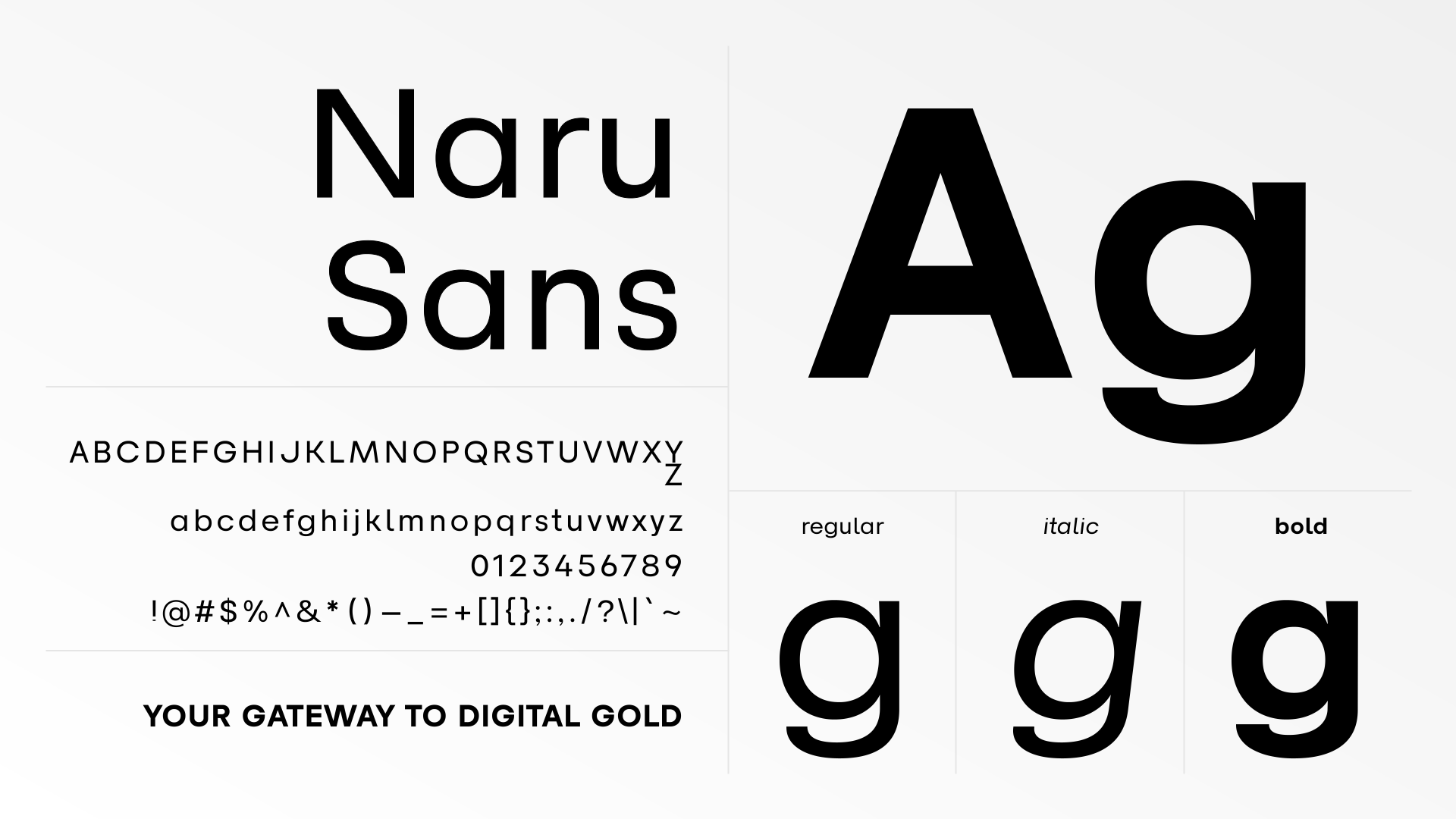
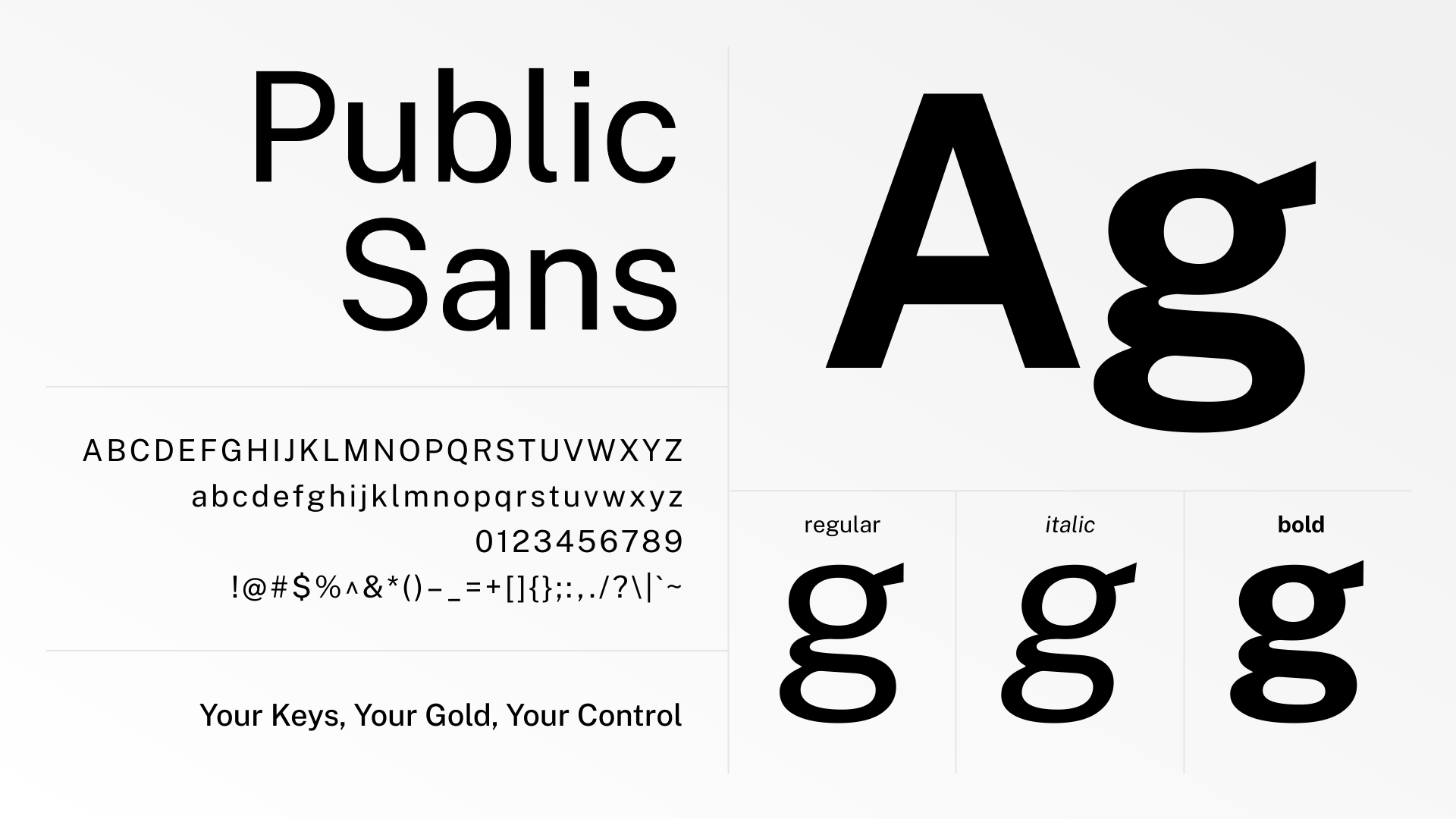
Typography & Color Scheme
I built the complete token set, dark-neutral colour system, typography scale, and component library from scratch before any feature screen design.



MVP shipped, system ready to scale
The two-month sprint delivered a production-ready responsive web application covering the complete financial lifecycle. Early pilot feedback validated the core design approach.
- MVP launched: buy, sell, swap, send, and receive flows live in a responsive web app
- Design system built from scratch – scalable component library ready for new payment methods and assets without redesign
- Pilot testing showed faster time-to-quote and measurable reduction in user confusion compared to competitor benchmarks
- Safety checks for network addresses and rate expiries successfully cut avoidable transaction errors
- Progressive KYC implementation – users provide information only when required, reducing onboarding drop-off
- Notification and receipt system gave users a clear transaction audit trail – a key requirement for tax record-keeping
Want to see how it was built?
The process page covers the full research methodology, six design phases, design system architecture, and what I’d do differently – with diagrams for each stage.


